Trauma Informed Design is a set of principles that are rooted in the healthcare approach of Trauma Informed Care. It’s a human-centered mindset and practice to treat people who have experienced trauma in their life. This can be those who have survived or are surviving abusive relationships, homelessness, poverty, etc. In healthcare, the practice is applied in communications, treatments, interactions and even within the environment and physical experience.
When I began working on the Walgreens B2B exhibit, I wanted to approach it in the lens of Trauma Informed thinking. It felt very appropriate for Walgreens, one of the country’s most accessible healthcare institutions. There’s a data point that blew my mind and really inspired me. Over 75% of the country lives within 5 miles of a Walgreens. This puts Walgreens in a position to be one of the most accessible points of healthcare for our communities across the US.
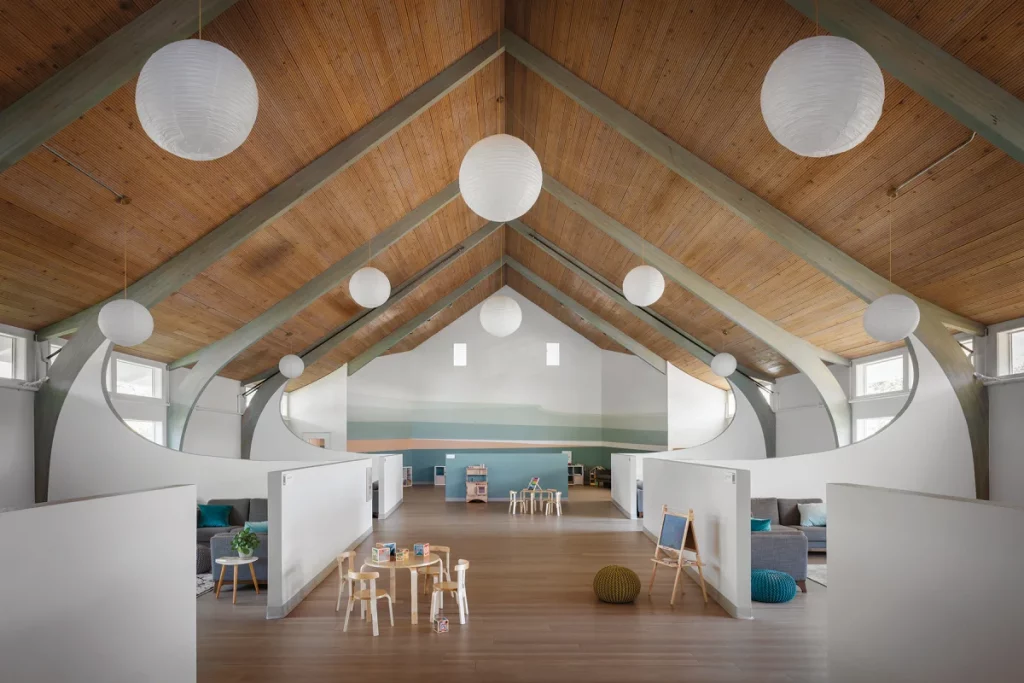
The above image, Jessica Helgerson’s design for Path Home, is a great example of Trauma Informed Design in practice in the built environment.
There has been a movement in experience and spatial design since the pandemic that considers the entire population of the world to have survived a shared trauma in the lock-downs, quarantines and social distancing. Considering this, I wanted to create a space on the show floor that could serve as a footprint of approachable, open, safety. I see traditional things like welcome desks positioned at entries as barriers and obstacles. It naturally makes one turn away. The space itself needs to create a balance of open sightlines but also feel secure and safe to ensure holistic conversations. Intent should even come to furniture placement. Furniture that creates a face to face interaction feels aggressive. Angling the seating slightly opens up a comfort to interact.
Taking material queues from their brick and mortar retail locations was a way to bring a cohesive environmental experience across their brand. We spoke with their internal store design teams to get a sense of finishes and customer experience they were working on for future developments at the time. And I find that their environmental branding for their retail locations were a key component to bring in to their space.
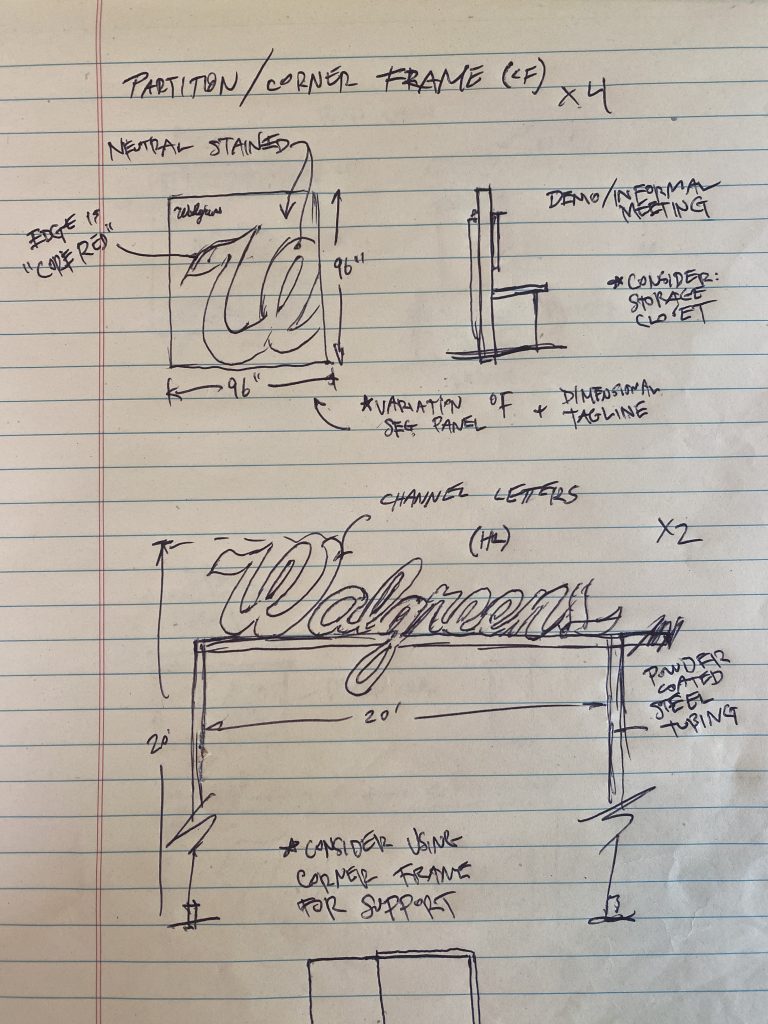
It came to life at the HLTH conference creating approachable spaces for sales goals and mixed use properties that were programmed throughout the event.